Sunday, June 19, 2022

The 306 Greatest Books #171 - Gilgamesh

The next up on my reading of the 306 greatest books is Gilgamesh by an unknown author. The book can be found on the Norwegian and My Book Lists.


Gilgamesh is one of, if not the, oldest story known today. Written at least 4,000 years ago, it was originally found on a series of clay tablets in the cuneiform language. When originally discovered, we had not yet cracked the cuneiform code and therefore the story sat without us knowing what we had. Roughly 150 years ago linguists cracked the cuneiform code and the story of Gilgamesh was slowly realized and spread out among the world. So despite it being likely the oldest story we have today, it is still fairly young to modern literature, as opposed to The Iliad and The Odyssey. Written as an epic poem, Gilgamesh has not faired completely unharmed through the ages. The story itself is littered with missing words and whole sections of the story just missing. These gaps represent where tablets were illegible or even completely broken apart. The gaps cause a lot of the story to remain unknown, however, luckily, the story has a tendency to repeat itself. A lot. This allows us, as the reader, to potentially piece together many of the missing sections. The repeated sections also adds to the theory that this was originally meant to be presented in front of a live audience. Unfortunately though, the many, many repeated sections in written form have a tendency to get glossed over by the reader. The story itself tells of the ancient Mesopotamian king Gilgamesh who stands over 18 feet tall. Across the 12 known tablets, Gilgamesh battles the guardian Humbaba, he makes some friends along the way, and eventually becomes part of the tale of a great flood sent by the gods to inundate the world. There is even a boat that needs to be built in order to survive the flood (with specific building measurements given). This story, although near identical to the biblical account of the flood, was written over a thousand years earlier resulting in a very interesting history lesson. Overall I found the story of Gilgamesh to be alright on its own, however I found the most fascinating part was the history behind the story and all the contexts interlaid within the story itself. I highly recommend the Sophus Helle translated version, which includes essays about the epic and provides much needed context about various parts of the story. Being the foundational work of essentially the civilization that followed makes me want to recommend this work to everyone.   


Wednesday, May 18, 2022

The 306 Greatest Books #170 - The Plague by Albert Camus

 The next up on my reading of the 306 greatest books is The Plague by Albert Camus. The book can be found on the Observer and My Book Lists.


Despite this book being added to a 100 greatest books list that was compiled in 2003, it is more perfectly timed for right now than any other book I have read on any of the lists. It feels as if it were made for the "post Covid times" (whether we have reached that yet or not) and fits into the narrative that we all have been living for the last two years. Based on the cholera epidemic of the 1800's, the book takes place in the French Algerian city of Oran during the 1940's (I assume post WWII). The story starts off with first hand accounts of rats dropping dead all over the city and proceeds from there into full lockdowns and hospital clinics being overwhelmed. You can physically match the trajectory of the story to the Covid pandemic (without the rats) and as each phase was entered in the story I was able to place that in our own timeframe. With the narrative set up through the use of first hand accounts and journal articles it also feels phenomenally like World War Z, however the similarities do diverge as this story progresses and the reliance on journal articles and first hand accounts is not as pronounced. The entire story is also guided by an unknown narrator, whom we find out who is at the end of the story. It is an enjoyable story and one I would actually recommend, more so now than probably I would have 3 years ago.  

Saturday, April 30, 2022

The 306 Greatest Books #169 - On the Road by Jack Kerouac

The next up on my reading of the 306 greatest books is On the Road by Jack Kerouac. The book can be found on the Observer and BBC Book Lists.


As one of the seminal books of the Beat Generation, On the Road gets a sort of larger than life impression every time that I hear about it. Before I started the book I had thought it was a sort of autobiography/life lessons tale and that is sort of how it turned up after I read it. The book is essentially an autobiography, except with the names changed and, as far as I am aware, some of the circumstances adjusted for the narrative. The book essentially follows Sal Paradise in the first person role (standing in for Kerouac himself), along with the other prominent figure in the book, Dean Moriarty, standing in for his real life friend Neal Cassady. The narrative is broken up into 5 parts, each of which encompasses a unique cross country trip where Sal "just has to get away". Often times the trips are hitchhiking, bus travel, or driving a car into the dirt, and all of them are with Dean along with an assortment of other characters that come and go throughout the narrative. Taking place in the mid 1940's, post war, we are getting a different picture of America than we have today. Yes, things are cheaper, such as gas, but people are making much less and we see into the lives of those on the lower end of the socioeconomic spectrum. We live with them through the book and talk to them and really get a sense about who they are and what matters to them. That along with the prose, which is absolutely riveting, really draws you into the story. The style of the book is written based on a rambling, run-on letter that Kerouac once received from Cassady with the sentences sometimes going on and on, and other times being cut rather short. Ideas, themes, and questions are often brought up in the story and then immediately dropped, never to be answered or even acknowledged again. Kerouac's descriptions though, and his often poetic prose, makes this a beauty to read with bits and pieces of contemplative fiction and philosophy creeping in that is often profound in its take. 

With all that being said, there is a major negative to the book. And that is that it's content is often homophobic, racist, misogynistic, pedophiliac, and probably lots of other negative adjectives that I can't think of at the moment. It's like these characters dive into these worlds of sex and drugs and are still able to pick out the negative stereotypes about everything. But it is weird, in that they "love" those stereotypes so it is a kind of "romanticized racism". With all of the gay characters in the book it is also super weird at how homophobic the book really is, however reading outside the book, I found out that Kerouac was rather a homophobe himself despite having almost all of his friends it seems in the LGTBQIA community. And although the book is often romanticized about it's "get out and see life" message, I see it as a tragedy, with the character of Dean slowly destroying his life through one method or another, and a character that could seriously have used medical and therapy intervention that could have perhaps helped with his constant downward spiral throughout the book. He gets to the point where he is often characterized as not being able to speak or make a sensical thought by the end of the book. If anything I see this book as a warning, and not necessarily a romantic adventure book. Overall, I would say that despite the beautiful prose, and the fantastic look at America in that time period, it is hard to recommend given all of the negatives throughout the plot and I would have to say unless you are really interested in reading it you could likely skip is and be fine.  

Monday, April 11, 2022

The 306 Greatest Books #168 - The Complete Tales by Edgar Allan Poe

The next up on my reading of the 306 greatest books is The Complete Tales by Edgar Allan Poe. The book can be found on the Norwegian Book List.

Taking me almost exactly two years to finish, The Complete Stories by Edgar Allan Poe was the version of the book I chose to read for this list. It is listed as The Complete Tales and therefore I assumed The Complete Stories would work. I collect the Everyman's Library of books and the version they had only included the short stories and none of the poems. Still, at over 950 quite dense pages and 68 stories, it took a while to work through. That, and Poe's writing style was a bit more, verbose, than I was expecting. Of the 68 stories, I had actually only heard of, and read, three or four of them, with most remaining a complete mystery to me. The book is arranged chronologically and this is both a help, because you can see how his writing style evolved over time, but also a hindrance because in the beginning he wrote very sesquipedalian (ha! now there's a word). This means his vocabulary was so large that trying to read any of his early stories was an exercise in frustration, because not many people could understand his writings without extensive dictionary work. He was plainly brilliant, but his writing had a high barrier to it and I quickly grew tired of trying to wade through the text. I kept trying again and again over the two years and I noticed he eventually was able to hit a rhythm where his prose, while still having some larger words, was "dumbed down" enough to allow the regular reader to be able to enjoy the text. This turning point actually happened right around the time he published his longest work, "The Narrative of Arthur Gordon Pym". It was from here that I really started to enjoy his work. 


Personally, I am not the biggest fan of short stories because the quality is often all over the place. Some are great and some not so much, and I feel Poe is much the same. He wrote many of his stories with these random asides at the beginning that felt less a part of the story and more like he was philosophizing about anything. But once you get past these random asides, usually about a page or two in length, the story kicks in and is often enjoyable. His well known stories, like "The Tell-Tale Heart" and "The Pit and the Pendulum" are truly masterpieces and noticeably enjoyable amongst his other works. There is a reason they are picked out among his ample catalogue. But there are others I would recommend as well including the afore mentioned "The Narrative of Arthur Gordon Pym", "The Premature Burial", "The Gold-Bug", and one that is especially important in literary history, "The Murders in the Rue Morgue". As I was reading "The Murders in the Rue Morgue" I was convinced Poe just ripped of Doyle's Sherlock Holmes character. But as I thought about it, the timing didn't seem right and I looked it up and sure enough, one of Doyle's influences was Poe. "The Murders in the Rue Morgue" is essentially the original detective fiction. Poe then followed it up with two sequel short stories, "The Mystery of Marie RogĂȘt" and "The Purloined Letter". And although these aren't the sitting on the edge of your seat thrillers that we know of today in many detective stories, they are still enjoyable for what they are and a fun mystery to work through. Overall, I would say that the majority of Poe's work is excessively difficult to wade through and I wouldn't recommend most people to attempt it, however many of his works do stand out as simply outstanding and those are the ones everyone should cherry pick to read.

Friday, November 19, 2021

Home Remodel - Guest Bathroom

 The final project I worked on before we moved from Utah was getting the guest bathroom set for selling the house. It took a little less than 4 months from start to finish, which was just slightly longer than my 1 month estimate, but I think it came out pretty good.

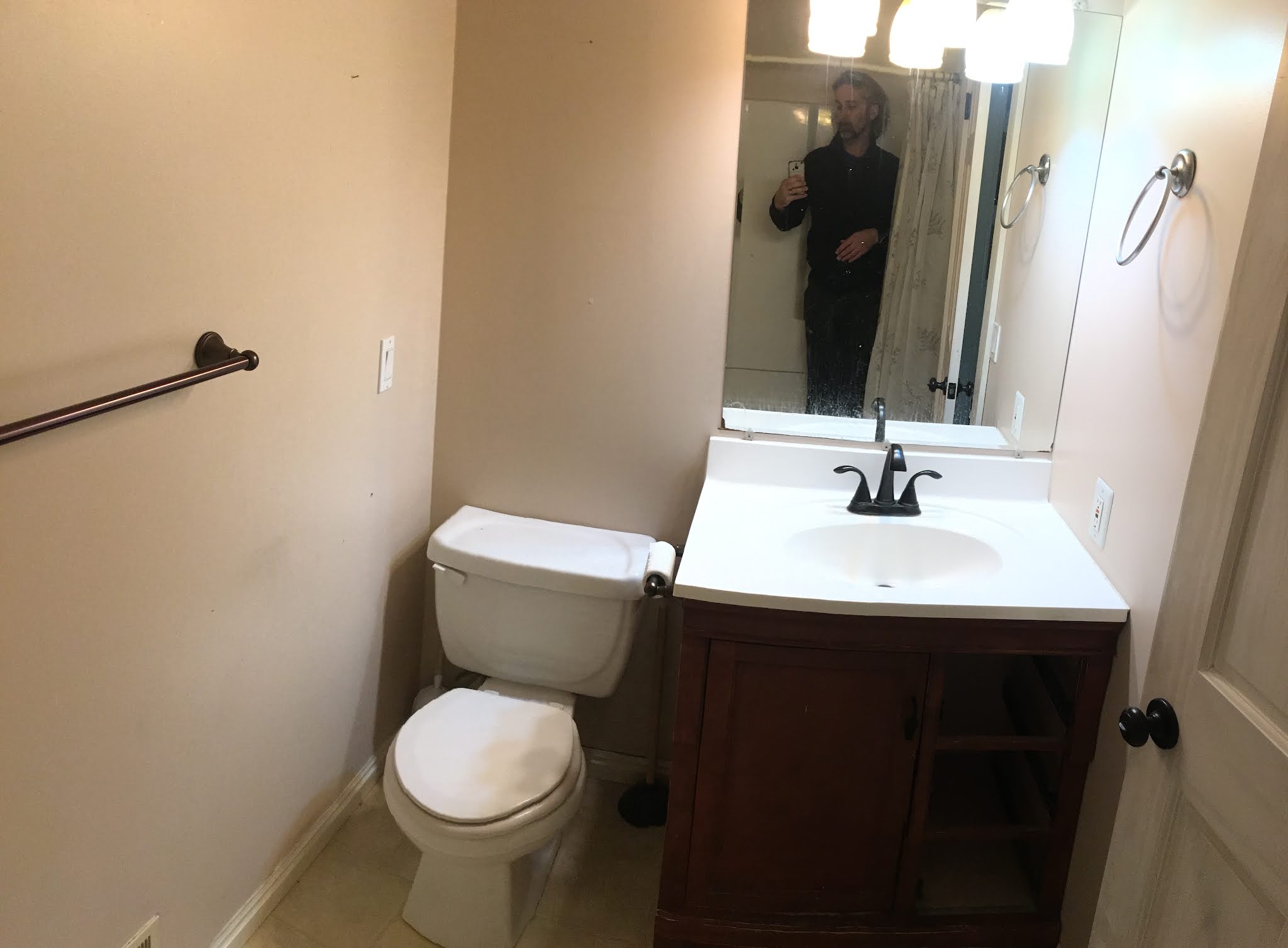
Before shots of the bathroom. 

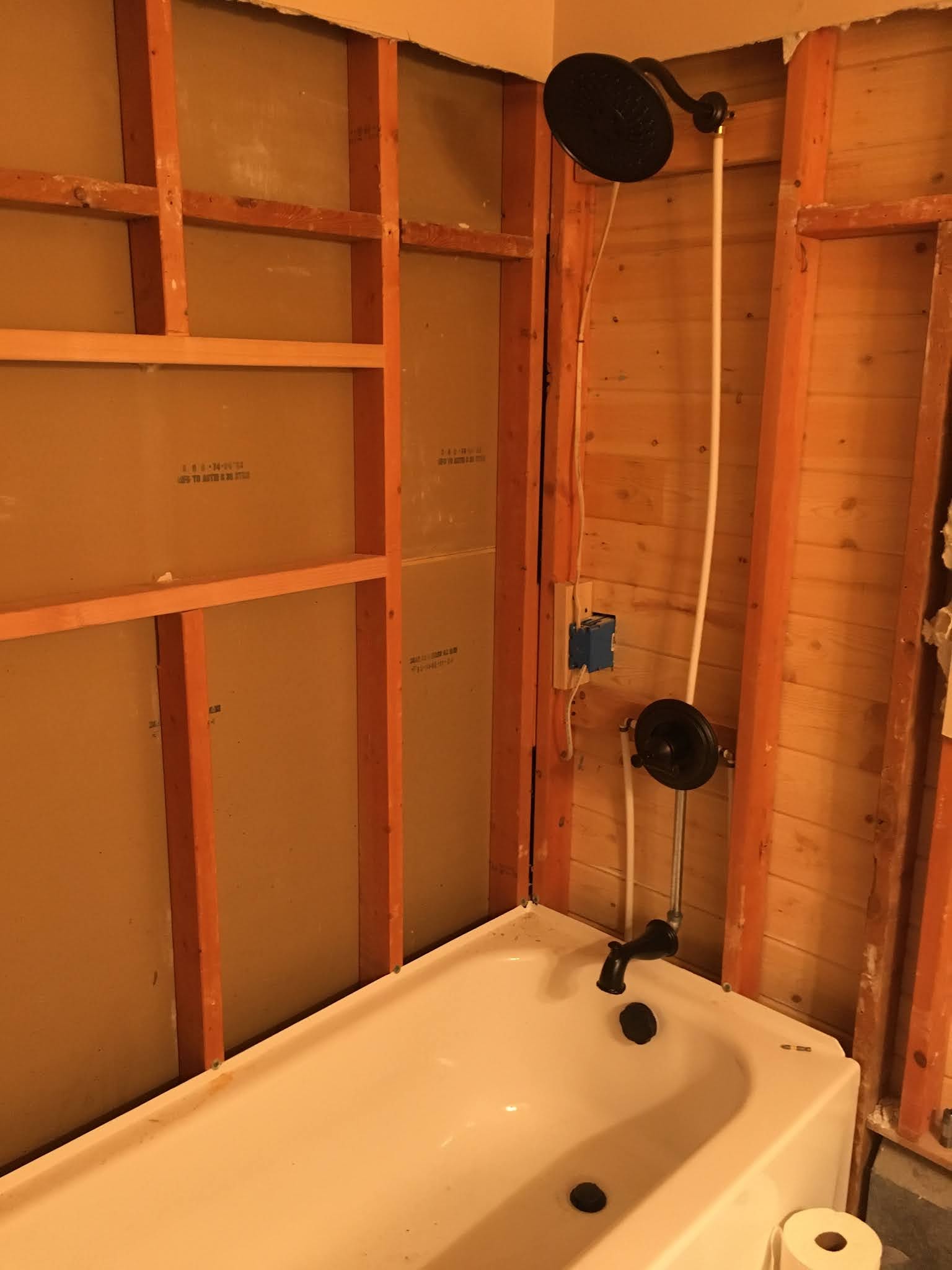
Before shot from the other side standing in the tub.

First job, strip everything out. This involved removing the plastic shower wall.

Then removing the tub and all the fixtures. Turns out the air intake for the furnace ran under the tub, so I will have to be careful with that when installing the new tub. 

Also removed the sink and toilet. The bathroom is a cube now.

A look at the floor with the vinyl flooring torn out. 

First step to putting everything back together was install the tub. This was a giant pain in the ass because of the size and placement of the tub in relation to the door. The tub was just slightly bigger than the door frame so I had to angle it in, and also remove the drywall on the far wall so it could lay flat to slide in. Eventually it was done.

Then I had to run the plumbing up from the basement. 

Before tiling, I laid down concrete floor boards so that the tiles would stick better than to the wood subflooring. I also extended the toilet drain up so it wouldn't get filled with tile mortar.

Testing out the placement of the tiles. It seems they will actually fit really well with minimal weird cut tiles. 

Installation of the tiles. Came out pretty good. I'm starting to like these larger floor tiles. 

And floor grouted and pipe cut down. 

Back to the shower. I ran all of the plumbing lines and installed the fixtures to get exact placements right. They will need to be removed to put up the concrete board and tiles but I want to make sure placement is perfect and there are no leaks before doing that. 

Removed the fittings and added concrete boards to the shower. The wife requested a shelf in the shower so I built one in. Fittings readded to make sure everything still fits and works right.

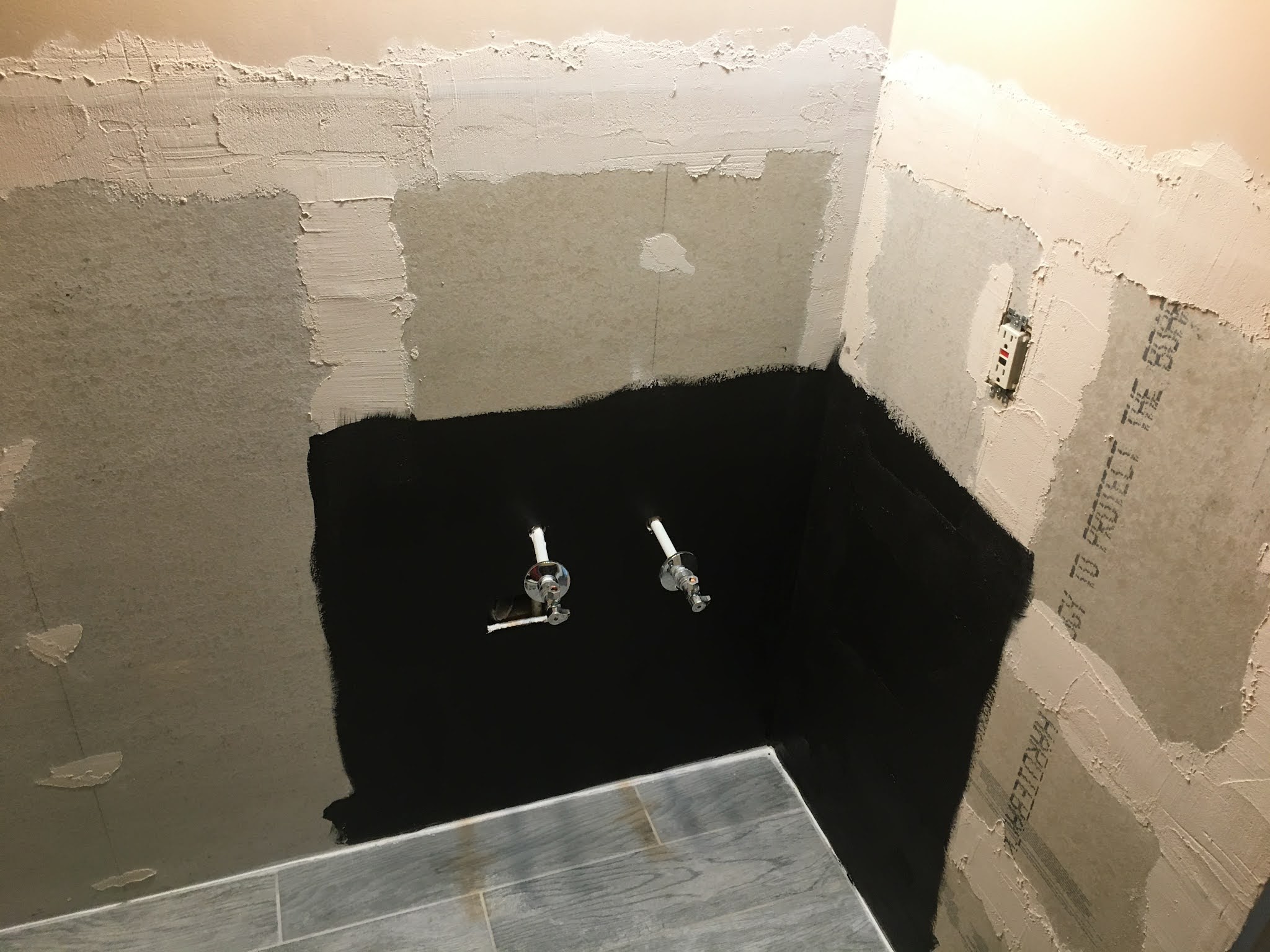
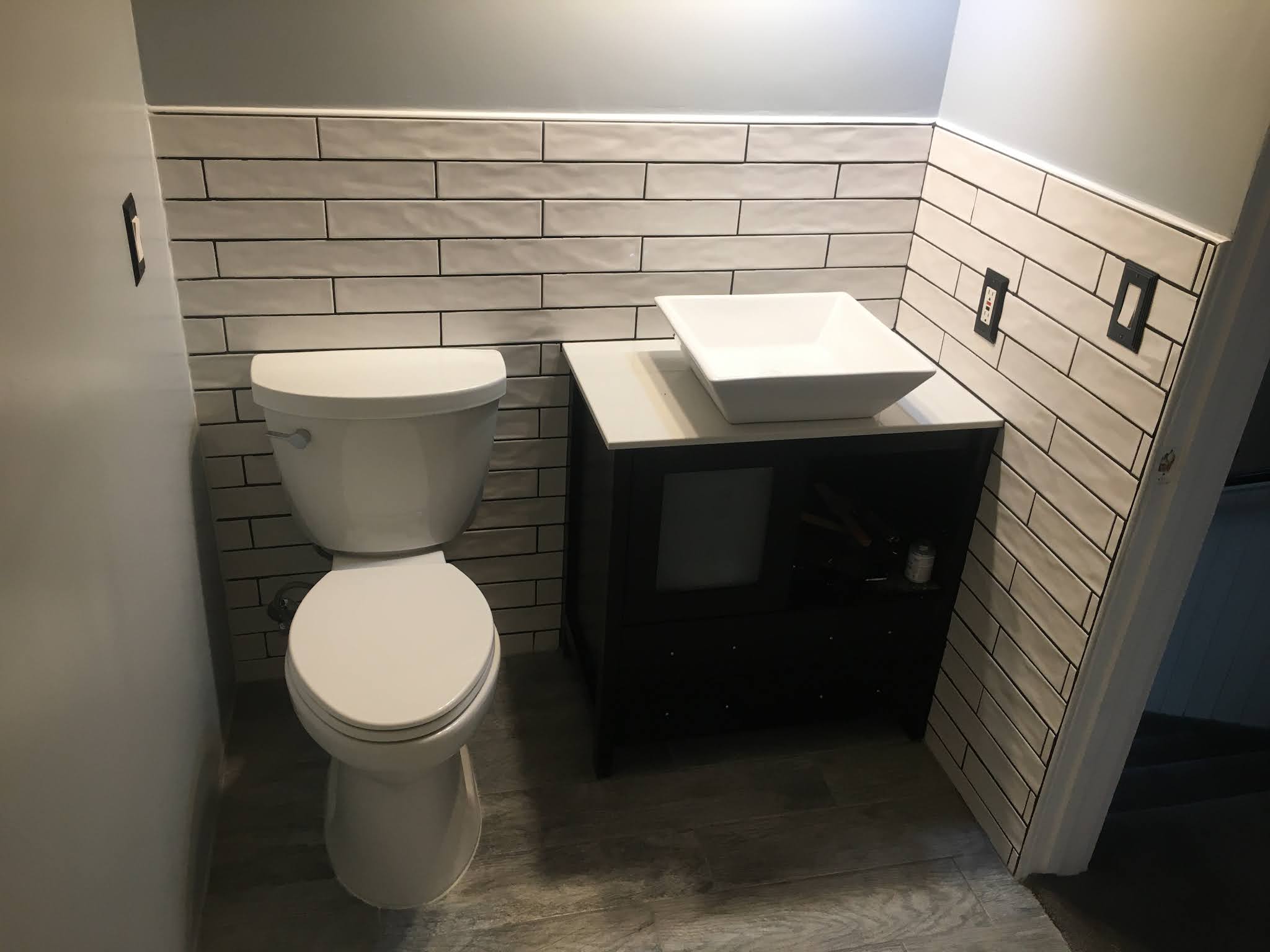
The wife wanted to add tile behind the toilet and around the sink, so the drywall was removed there and concrete board added for those. Also had to redo the plumbing for the sink. 

Finished up the concrete board around the sink.

Once the concrete board was "plastered", the vanity we purchased had a hole in the back where the plumbing attached. In order for it to not seem weird, I figured I'd paint the back of the vanity black to tie in. Seems weird of of place.

But once the vanity is installed it works well. 

Add the vanity top/ 

Start to tile around the back of the toilet and backsplash of the vanity. I don't have my tile edger yet so I'm waiting on here and will move on to the shower.

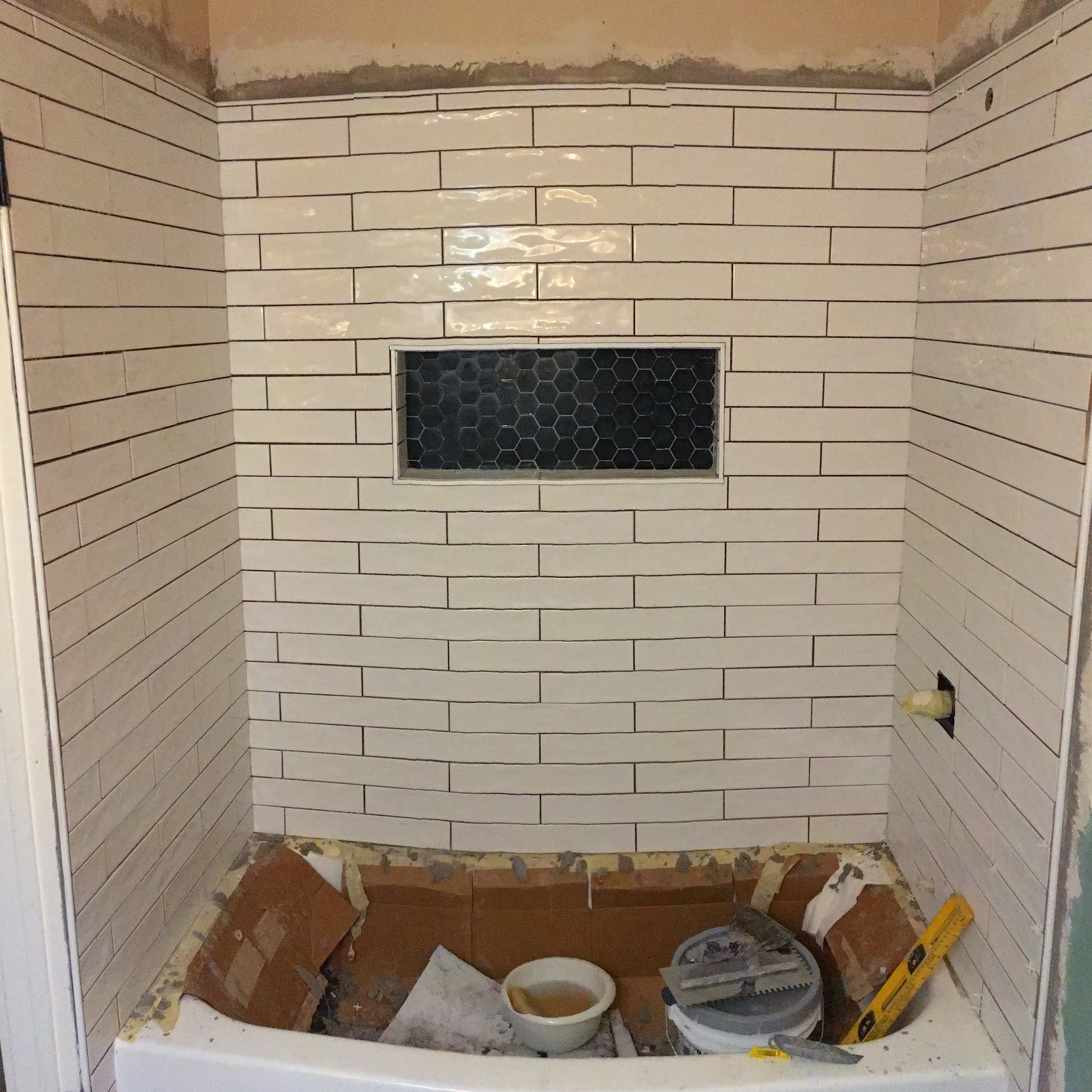
Jumping over to the tub, tiling starts off going fairly straightforward. Just getting up to the shelf level where lots more tile cutting will be needed. 

Tiles around the opening. 

And starting to tile on the side walls. At this point I needed to wait until I have the edger to finish off the side by the door frame. 

With the edger I can finish off the sink area, including tiling the right wall next to the sink.

As well as finishing off the left and back walls of the shower. 

Finished off the last wall on the right as well as put in the shelf accent tiles. 

Now is the time for the grout. The wife wanted black grout, which I've never used before. It is a pain to wash off completely. This is after the grout application. 

And after 1 complete wash.

And after the second wash.

Shower area also grouted with 2 washes.

And after the 3rd wash, it finally appears clean. The grout is also sealed to prevent the black from running in the future. 

Once tiling is done we can paint.

Tub tiles washed for the final time, sealed, and the walls painted.

And the fixtures readded back in.

Once painting is done we can start to add the main bathroom features like the toilet and sink.

Sink faucet added and plumbing hooked up.

Starting to piece the last bit of things together.

Water finally hooked back up to the sink.

A tie in from the carpet to the tile. This was eventually stained grey but I don't have a picture of the final version.

And the final shower.

And the final bath with new lights, mirror and towel bars.